10-day Japan itinerary for first-timers (plus 7 and 14 days, and how to get yours planned)
by psst, JAPAN, Tokyo
For a first trip to Japan, 10 days covers Tokyo (3 days), Kyoto (3), Osaka (1) and Hiroshima with Miyajima (3), all along one shinkansen line. Seven days fits Tokyo, Kyoto and Osaka; 14 days adds Himeji, Kurashiki and Naoshima. Fly into Haneda or Narita and home from Kansai Airport.
| Trip | Days in each place, in order | Best for |
|---|---|---|
| 10 days | Tokyo 3 · Kyoto 3 · Osaka 1 · Hiroshima & Miyajima 3 | A first trip with a little more depth |
| 7 days | Tokyo 3 · Kyoto 3 · Osaka 1 | First-timers who want the big three |
| 14 days | Tokyo 3 · Kyoto 3 · Osaka 1 · Himeji & Kurashiki 1 · Naoshima 2 · Hiroshima & Miyajima 2 · Okayama & Osaka 2 | A first trip with time for smaller towns |
Fly into Tokyo and home from Kansai Airport, so you never ride back the way you came. Tokyo and Kyoto get three days each on every route.
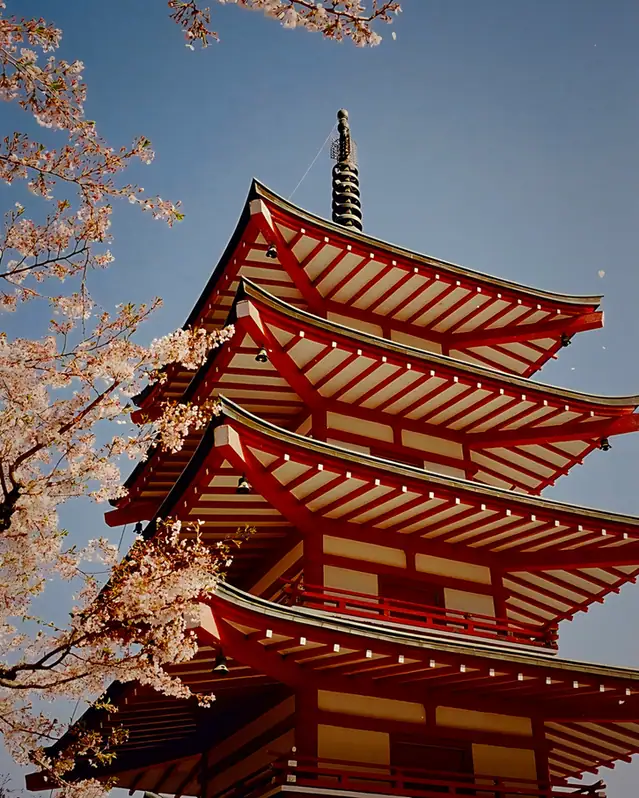
What’s the best 10-day Japan itinerary for a first trip?
Spend three days in Tokyo, three in Kyoto, one in Osaka and three in Hiroshima and Miyajima, then fly home from Kansai Airport. Every move is one train ride west: about 2 hours 10 minutes to Kyoto by Nozomi, 30 minutes to Osaka, 1 hour 30 minutes to Hiroshima.
- Day 1Land in Tokyo, top up an IC card, dinner at a counter in Omoide Yokocho.Haneda about 30 min, Narita about 1 hour
- Day 2Senso-ji before the tour groups, Ueno, then Meiji Jingu to the Shibuya crossing.
- Day 3Tsukiji Outer Market, the Imperial Palace East Gardens, Ginza or teamLab Planets.
- Day 4Tokyo to Kyoto, then Kiyomizu-dera, Sannenzaka and Yasaka Shrine at dusk.Nozomi 2h08–2h21
- Day 5Fushimi Inari at first light, Arashiyama late morning, Gion and Pontocho at night.
- Day 6Kinkaku-ji at opening time, then the Philosopher’s Path. Or swap it for Nara.Kyoto–Nara 35 min Kintetsu / 45 min JR
- Day 7Osaka: the castle, Kuromon Market, Dotonbori and Shinsekai.Kyoto–Osaka about 30 min
- Day 8On to Hiroshima: the Peace Memorial Park and Museum.Shin-Osaka–Hiroshima about 1h30
- Day 9Miyajima: Itsukushima Shrine and Mount Misen. Stay the night if you can.about 30 min by JR + 10 min ferry
- Day 10Shukkeien garden, then home via Kansai Airport, or about 4 hours by shinkansen to Tokyo.
Full route, where to sleep and what to book: 10-day itinerary →
Is 7 days enough for Japan?
Yes, for Tokyo, Kyoto and Osaka: three days in Tokyo, three in Kyoto and a last day in Osaka before you fly home from Kansai Airport. It leaves out Hiroshima, Miyajima and the smaller towns.
- Day 1Land in Tokyo. Get an IC card at the airport, then an easy evening in Shinjuku.Haneda about 30 min, Narita about 1 hour
- Day 2Old Tokyo: Senso-ji in Asakusa early, then the lanes of Yanaka and Ueno Park.
- Day 3New Tokyo: Tsukiji Outer Market, Meiji Jingu and Harajuku, Shibuya at dusk. Send your suitcase to Kyoto tonight.
- Day 4Tokyo to Kyoto, then Higashiyama on foot: Kiyomizu-dera, Sannenzaka, Yasaka Shrine.Nozomi 2h08–2h21
- Day 5Fushimi Inari’s gates at first light, then Arashiyama’s bamboo and river.
- Day 6Kinkaku-ji at opening time, Ryoan-ji’s rock garden, Gion in the evening.
- Day 7Osaka: Kuromon Market and Dotonbori, then the Haruka to Kansai Airport.Kyoto–Osaka about 30 min · Osaka–Kansai Airport about 50 min
Full route, where to sleep and what to book: 7-day itinerary →
Is two weeks enough for Japan?
Yes, and it adds smaller places without long transfers. The first week is Tokyo, Kyoto and Osaka; the second continues west to Himeji Castle, Kurashiki, the art island of Naoshima, Hiroshima and Miyajima.
- Day 1Land in Tokyo, get an IC card, keep the evening short.Haneda about 30 min, Narita about 1 hour
- Day 2Senso-ji early, Ueno Park, then Meiji Jingu, Harajuku and Shibuya.
- Day 3Tsukiji Outer Market and Ginza, or a day out to Kamakura.Kamakura about 1 hour by JR
- Day 4Tokyo to Kyoto, then Higashiyama on foot.Nozomi 2h08–2h21
- Day 5Fushimi Inari at first light, Arashiyama, Gion in the evening.
- Day 6Kinkaku-ji and the Philosopher’s Path, or Nara’s deer and Todai-ji.Kyoto–Nara 35 min Kintetsu / 45 min JR
- Day 7Osaka. Send your big suitcase ahead to your Day 13 hotel.Kyoto–Osaka about 30 min
- Day 8Himeji Castle, then Kurashiki’s canal quarter after dark.Shin-Osaka–Himeji 30 min · Himeji–Okayama 20 min · Okayama–Kurashiki 17 min
- Day 9The Ohara Museum in the morning, then the boat to Naoshima.Okayama–Uno 50 min · Uno–Naoshima 20 min by boat
- Day 10Chichu Art Museum (timed tickets), then west to Hiroshima.
- Day 11Hiroshima: the Peace Memorial Park and Museum, Shukkeien garden.
- Day 12Miyajima, and a night on the island if you can.about 30 min by JR + 10 min ferry
- Day 13Korakuen garden in Okayama, then back to Osaka.Okayama–Shin-Osaka 45 min by Nozomi
- Day 14A last breakfast in Osaka, then the Haruka to Kansai Airport.about 50 min
Full route, where to sleep and what to book: 14-day itinerary →
Times are station to station, from official rail and tourism pages (see Sources). Add 30 to 45 minutes for checking out and finding your platform.
Is my itinerary too busy? How many bases should I use?
Plan two or three areas a day, count every moving day as a half day, and keep hotel changes few: two bases for 7 days, four or five for 10. Send your big suitcase ahead and travel between cities with a day bag.
| Trip | Hotel bases | Fly in → out |
|---|---|---|
| 7 days | 2 (Tokyo, Kyoto) | Haneda or Narita → Kansai |
| 10 days | 4–5 (Tokyo, Kyoto, Osaka, Hiroshima, Miyajima) | Haneda or Narita → Kansai |
| 14 days | 7–8 | Haneda or Narita → Kansai |
- Two or three areas a day. Tokyo works best as neighborhoods joined by trains, not as one list of sights.
- Moving days are half days. Add 30 to 45 minutes to each move for checking out, getting to the station and finding your platform, and 15 minutes per change of train at a big station.
- Kyoto gets three nights. It rewards early mornings, and two nights gives you only one.
- Let your bag travel separately. Hotels and convenience stores send it to your next hotel; see luggage forwarding.
Tokyo or Osaka first? Fly into one, out of the other
Fly into Tokyo (Haneda or Narita) and out of Kansai Airport near Osaka. That “open-jaw” ticket saves the four-hour shinkansen ride back to Tokyo at the end.
- Tokyo first puts the busiest city at the start, when you have the most energy, and ends with the calmer west: Kyoto, Hiroshima, Miyajima.
- Osaka first works the same in reverse: fly into Kansai and finish in Tokyo. You meet the biggest city when you’re most tired, but if your flight home leaves from Tokyo it saves the long ride.
- Only a return ticket to Tokyo? Keep the route and add about 4 hours by direct shinkansen from Hiroshima on the last day, or about 2 hours 25 minutes from Shin-Osaka.
How do you get from Tokyo to Kyoto?
By shinkansen from Tokyo Station. The Nozomi takes 2 hours 8 to 21 minutes and the Hikari, which the JR Pass covers without an extra ticket, 2 hours 26 to 59 minutes; allow about 3 hours hotel to hotel.
Travel times on these routes
| From → to | Train | Time |
|---|---|---|
| Haneda Airport → central Tokyo | Keikyu or Tokyo Monorail | about 30 min |
| Narita Airport → Tokyo Station | Narita Express (JR) | just under 1 hour |
| Tokyo → Kyoto | Nozomi shinkansen | 2h08–2h21 |
| Tokyo → Kyoto | Hikari shinkansen (JR Pass, no extra ticket) | 2h26–2h59 |
| Kyoto → Osaka | JR Special Rapid | about 30 min |
| Kyoto → Nara | Kintetsu limited express / JR | 35 / 45 min |
| Shin-Osaka → Hiroshima | Nozomi shinkansen | about 1h30 |
| Hiroshima → Miyajima | JR Sanyo Line + JR ferry | about 30 + 10 min |
| Osaka Station → Kansai Airport | Haruka limited express (JR) | about 50 min |
Japan travel times: 22 routes, door to door → · Shinkansen with a JR Pass →
Where should first-timers stay in Tokyo, Kyoto and Osaka?
In Tokyo, stay near a Yamanote Line station: Shinjuku, Shibuya, Ginza and Tokyo Station, Asakusa and Ueno, or Shinagawa. In Kyoto, stay by Kyoto Station, Kawaramachi or Gion; in Osaka, Namba or Umeda.
- Tokyo: Shinjuku for food and trains in every direction; Tokyo Station or Ginza for a calm base next to the shinkansen; Asakusa for the old-town feel. Where to stay in Tokyo: 5 areas →
- Kyoto: Kyoto Station for trains and day trips, Kawaramachi and Shijo for restaurants, Gion and Higashiyama for quiet evenings near the temples. Where to stay in Kyoto: 3 areas →
- Osaka: Namba for Dotonbori and the airport trains, Umeda for trains to Kyoto. Where to stay in Osaka: 3 areas →
Is the JR Pass worth it in 2026?
Only if your JR rides add up to more than the pass. Since 1 October 2026 the 7-day pass costs ¥53,000 and the 14-day pass ¥84,000 (Ordinary, adult); on the official JR Pass website it is still ¥50,000 and ¥80,000 for a limited time, with no end date announced.
| JR Pass | IC card (Suica, PASMO, ICOCA) | |
|---|---|---|
| What it pays for | JR trains, including most shinkansen, the Tokyo Monorail and the JR ferry to Miyajima | Trains, subways and buses across Japan, plus convenience stores and shops |
| Nozomi (fastest Tokyo–Kyoto train) | Not on its own: a separate ticket for each ride, or take the Hikari | No: buy a shinkansen ticket |
| City subways and private lines | Not covered | Yes |
| Cost | ¥53,000 for 7 days (¥50,000 on the official website, for now) | Welcome Suica: no deposit, valid 28 days, top up with cash |
| Best for | Long JR rides that add up to more than the pass | Everything local, every day; you need one either way |
Write your long rides down, price them as single tickets with JR’s own fare search, and compare. On the 10-day route, a 7-day pass started on Day 4 covers every long ride from Tokyo onwards. Prices checked on the official JR Pass site on 8 November 2026.
JR Pass prices and the 2026 change → · Which IC card to get →
How much does a 10-day Japan trip cost?
It depends mostly on your hotels and food, which vary by season and taste, so we don’t quote an all-in figure. The fixed parts have official prices: a 7-day JR Pass is ¥53,000 (¥50,000 on the official website for now), and the ¥3,000 departure tax is usually already in your air ticket.
| What | Official price | Notes |
|---|---|---|
| JR Pass, 7 days | ¥53,000 / ¥50,000 | Ordinary, adult; agents / official website. Covers Days 4–10 of the 10-day route |
| JR Pass, 14 days | ¥84,000 / ¥80,000 | For the 14-day route, if your rides add up |
| IC card | no deposit | Welcome Suica; you top it up for local rides |
| Departure tax | ¥3,000 | Per departure since 1 July 2026, normally inside your ticket |
| Accommodation tax | Kyoto ¥200–¥10,000 Tokyo ¥0–¥200 | Per person, per night, by room rate; Kyoto from 1 March 2026. Tokyo has proposed a change |
| Coin lockers | about ¥300–600 a day | Depends on size |
| Tips | none | Tipping isn’t customary |
| Hotels, food, sights | vary | Set by you; a tailor-made plan gives three budgets for every stay (松 Matsu · 竹 Take · 梅 Ume) |
Accommodation tax, city by city → · Departure tax →
What changed for visitors to Japan in 2026?
Three things: the departure tax rose to ¥3,000 on 1 July 2026, the nationwide JR Pass got more expensive from overseas agents on 1 October 2026, and tax-free shopping became a refund on 1 November 2026.
- Departure tax: ¥3,000 per departure, up from ¥1,000, almost always added to your ticket. More →
- JR Pass: ¥53,000, ¥84,000 and ¥105,000 for 7, 14 and 21 days (Ordinary, adult); the official website keeps the old prices for a limited time. More →
- Tax-free shopping: you pay full price in the shop, show the goods to customs when you leave, then get the tax back. Spend ¥5,000 or more in one store on one day. More →
What else do first-timers get stuck on in Japan?
Four things: IC cards, luggage between cities, what to book ahead, and cash.
Do I need an IC card (Suica)?
Yes. Suica, PASMO and ICOCA pay for trains, buses and convenience stores across Japan. Welcome Suica, the visitor version, has no deposit and lasts 28 days; buy it at Narita or Haneda Terminal 3 and top it up with cash.
Can I send my suitcase ahead?
Yes. Airports, most big hotels and designated convenience stores send bags to your next hotel; look for the “Hands-Free Travel” logo. Bags generally need to be under 160 cm in total, and you’ll often arrive before your suitcase, so pack the next night’s things in a day bag.
What should I book in advance for Japan?
Your rooms first, especially ryokan and small hotels in Kyoto. Shinkansen seats open at 10:00 Japan time one month before each travel day; Tokyo Disney tickets open two months ahead, the Ghibli Museum on the 10th of the month before.
Do I need cash in Japan?
Some. Cards work in most shops, restaurants and taxis in big cities, but restaurants are where cards fail most: 32% of visitors who had card trouble had it while eating out (Japan Tourism Agency survey). Carry yen for small restaurants, shrines and stalls.
Can someone plan my Japan trip around my own dates?
Yes. A tailor-made plan from psst, JAPAN is built from scratch around your dates, your people and what you love: $39 for one day, $239 for 10 days, up to $289 for 14 days.
What you get
- Every day hour by hour, in the right order
- Where to sleep, in three budgets (松 Matsu · 竹 Take · 梅 Ume)
- What to book, and the day bookings open
- The small manners for every stop
- Changes by email after delivery, included
- A before-you-go list for your trip
Ready within 7 days of your order.
What a day looks like
- 08:30Breakfast at a market counter
- 10:00Temple garden, before the tour groups
- 12:30Lunch two streets back from the main road
- 14:00A craft shop with a workshop
- 16:30Bathhouse, then a slow walk
- 19:00A standing bar, and how to order
Example only.
Every length from 1 to 14 days has its own price. Prices in US dollars.
Start a tailor-made planWho makes the plan, and who do you pay?
A small team in Tokyo, the people behind psst, JAPAN, makes it; you pay psst, JAPAN (lecteur Inc., Tokyo) by card through Stripe, in US dollars.
- Who makes it: the small team in Tokyo behind psst, JAPAN. No names, no faces.
- Who you pay: psst, JAPAN, run by lecteur Inc., Tokyo, by card through Stripe. Legal notice
- Refunds: tailor-made, cancel within 24 hours of ordering for a full refund; ready-made, refund within 8 days of purchase. Terms
- Currency: prices are in US dollars. If your card is in another currency, your card issuer converts it.
- You stay in control: you book hotels and tickets yourself; we tell you what, when and how.
- Questions first? hello@psstjapan.com
Ready to plan your first trip?
Two short steps: your trip, then you and what you love. You see the price before you pay.
Start a tailor-made planHappy with one of the routes above? Pick a ready-made plan.
More questions
When is the best time to visit Japan for a first trip?
Spring and autumn. In a normal year the cherry blossoms open around March 24 in Tokyo and March 26 in Kyoto, and the autumn leaves come from mid-November. Summer is hot and humid; many sights close for a few days around New Year. March · April · November · December · all months
Can I do this itinerary with kids (Tokyo Disney, Universal Studios Japan)?
Yes, with a slower pace and fewer hotel changes. JR Pass child prices (ages 6 to 11) are about half the adult price, and Tokyo Disney Resort tickets go on sale at 2:00 p.m. two months before each date. For Universal Studios Japan in Osaka, add a day; a tailor-made plan builds the days around your children’s ages. What opens when
Do I need an eSIM in Japan?
If you rely on maps, yes, or a pocket Wi-Fi. Free Wi-Fi exists at airports, convenience stores and most city hotels but comes and goes; set up an eSIM at home on Wi-Fi and turn it on when you land. Japan eSIM compared
Do I need a visa for Japan?
It depends on your passport. Many passports enter visa-free; if yours isn’t on the Ministry of Foreign Affairs list, apply before you travel, as visas aren’t issued on arrival. Visas and entry
Should I tip in Japan?
No. Tipping isn’t customary at restaurants, bars, cafes, taxis or hotels; say “arigatou gozaimasu” instead. Tipping in Japan
Do I need travel insurance for Japan?
JNTO and the Japan Tourism Agency recommend it for every visitor: medical care is good but can be expensive. Look for cashless service, where the insurer pays the hospital directly. Travel insurance
Can I add Hakone or Mount Fuji?
Yes. Spend a night in Hakone between Tokyo and Kyoto: the Odakyu Romancecar takes about 85 minutes from Shinjuku to Hakone-Yumoto. It isn’t a JR train, and the night usually comes out of your Tokyo days. Hakone guide
Is it easy to travel around Japan on your own?
Yes, on these routes. Each move between cities is one train ride, shinkansen run every few minutes between Tokyo and Osaka, and one IC card pays for local trains and buses. Most lost time comes from going to the wrong station, not from slow trains. Japan travel times
Do you book hotels and tickets for me?
No. We tell you what to book, when it opens and how; you book it yourself, so every booking stays in your name.
How far ahead should I ask for a tailor-made plan?
At least two weeks before you travel. Your plan arrives within 7 days of your order, with time left for changes.
Sources
25 links · tap to open
Official pages, checked 29 October–8 November 2026. Times and prices change; check before you go.
- Kyoto City Tourism Association: getting to Kyoto from major cities (Nozomi 2h08–2h21, Hikari 2h26–2h59; Osaka–Kyoto about 30 min)
- JNTO: Narita Airport access
- Haneda Airport: access to the city
- Japan Rail Pass: official prices by where you buy (checked 8 Nov 2026)
- JNTO: nationwide JR Pass price increase from 1 October 2026
- Japan Rail Pass: routes covered (not Nozomi or Mizuho)
- JR East: Welcome Suica
- National Tax Agency: International Tourist Tax ¥3,000 from 1 July 2026 (PDF)
- Japan Tourism Agency: tax-free shopping refund method from 1 November 2026
- Kyoto City: accommodation tax from 1 March 2026
- Tokyo Metropolitan Government: accommodation tax
- JNTO: luggage storage and forwarding (coin lockers about ¥300–600 a day)
- smartEX: when shinkansen reservations open
- JNTO: credit cards and cash
- Japan Tourism Agency: visitor survey, FY2025 (PDF, Japanese)
- Nara City Tourist Association: access (Kyoto–Nara)
- Hiroshima Tourism Association: access to Miyajima
- Okayama Prefecture tourism: travel times (Shin-Osaka–Okayama, Haruka to Kansai Airport)
- Himeji City: access (Shin-Osaka–Himeji, Himeji–Okayama)
- Kurashiki City tourism: access
- Benesse Art Site Naoshima: access (Okayama–Uno, Uno–Naoshima)
- Japan Meteorological Agency: cherry blossom normals, 1991–2020
- JNTO: travel insurance
- JNTO: tipping in Japan
- Ministry of Foreign Affairs of Japan: visas