障子 shōji
shō-ji (long "o")
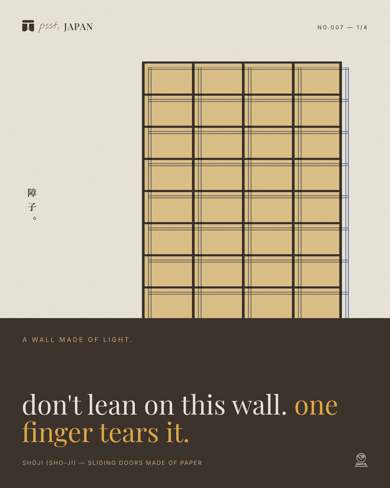
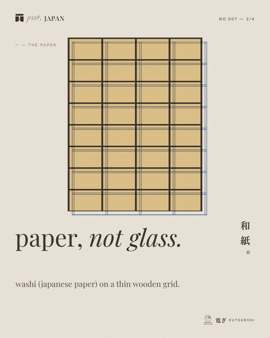
A sliding wooden lattice screen covered with translucent paper.
What it is
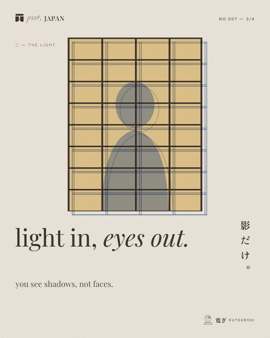
Shōji are the sliding panels you see in tatami rooms: a light wooden lattice with thin washi (Japanese paper) on one side. They divide spaces and close off rooms, but they don't block light. Daylight passes through as a soft, even glow, with no glare and no hard shadows.
That's the job. Glass lets you see out; shōji let light in while keeping the room private and calm. Many have a solid wooden panel along the bottom, which protects the paper at the height where feet and luggage tend to hit it.
Don't confuse them with fusuma, the opaque sliding doors (often painted or covered in patterned paper) used between rooms and on closets. Rule of thumb: if light comes through, it's shōji.
Why it matters
The word is old, and its meaning has narrowed. In the Heian period, "shōji" covered almost any partition: opaque panels, wooden doors, even free-standing screens. The translucent version had its own name, akari-shōji ("light shōji"). From around the late 12th to early 13th century, these were removable frames covered with thin silk or paper. As washi got better, paper became the standard, and over time the light-letting screen claimed the name for itself.
Shōji are one reason Japanese interiors feel the way they do. Rooms built around them are about controlling light rather than letting it flood in, and the paper turns harsh sun into something closer to lantern light.
Where to see it
- Ryokan rooms, often along the window side or between the room and the engawa
- Temple halls and abbots' quarters open to visitors
- Older restaurants with private tatami rooms
- Historic houses and villas open to the public
Manners
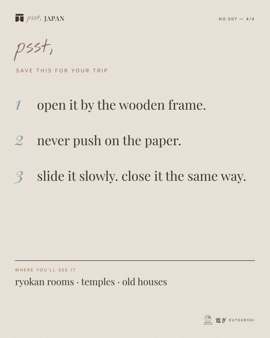
- Slide them gently, using the small recessed grip. Don't push on the paper
- Never poke the paper, even if it looks like it would be satisfying. Repairs mean re-papering
- Keep luggage and elbows away from the lower panels
psst,
Wake up early in a ryokan with the shōji closed. The light at dawn through the paper is half the reason to stay there.