縁側 engawa
en-ga-wa
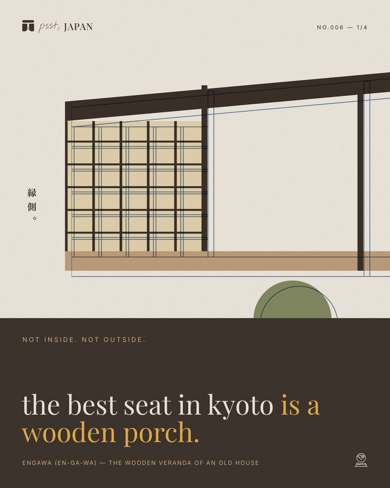
A wooden veranda strip between a room and the garden.
What it is
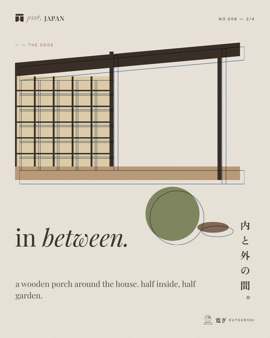
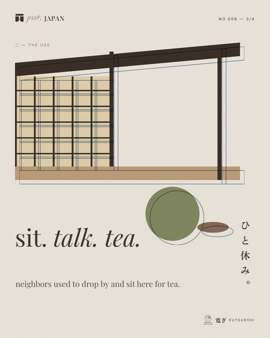
The engawa is the long, narrow wooden floor that runs along the edge of a traditional Japanese building, between the rooms and the outdoors. Slide open the screens of a tatami room and the engawa is what's beyond them: polished boards, a roof overhang above, and the garden right there.
There are a few kinds. In current usage, en (縁) tends to mean a veranda open to the air, while engawa often describes a corridor-like strip inside the building's outer doors, with sliding panels you can open to the garden. A nure-en, literally a "wet veranda," sits fully outside under the eaves and takes the weather. Some old buildings have verandas that wrap around all four sides; some use slatted boards with gaps so rain drains through and the wood dries faster.
It's not quite indoors and not quite outside. That in-between quality is the point.
Why it matters
The engawa is where a Japanese house stops being a box and opens up. In summer, with the panels slid back, rooms, veranda and garden become one continuous space for air and light. It's a buffer, too: the deep eaves and the strip of floor keep sun and rain off the rooms behind it.
At temples, it's how you're meant to see the garden. Zen dry gardens, in particular, are designed to be viewed from a seated position, from the abbot's quarters. Kneeling or sitting on the engawa, at the height the designers intended, the garden snaps into composition in a way it doesn't when you're standing.
Where to see it
- Zen temples in Kyoto with dry gardens, such as Ryōan-ji, where the garden lies south of the hōjō (abbot's quarters) and is viewed from the building
- Ryokan with garden-facing rooms; ask whether your room has an engawa or a hiro-en (wide veranda)
- Preserved farmhouses and old residences open to the public
Manners
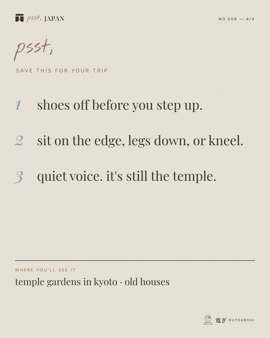
- Shoes off. The engawa counts as indoors, even when it feels like a porch
- At temples, sit quietly along the edge and leave room for others to pass behind you
- Don't step down into the garden unless there are stepping stones and clogs set out for that purpose
- Keep bags and drinks off the boards. Many are centuries old and kept polished by hand
psst,
Sit, don't stand. Five minutes at eye level with the garden tells you more than twenty minutes of walking past it.