玄関 genkan
gen-kan
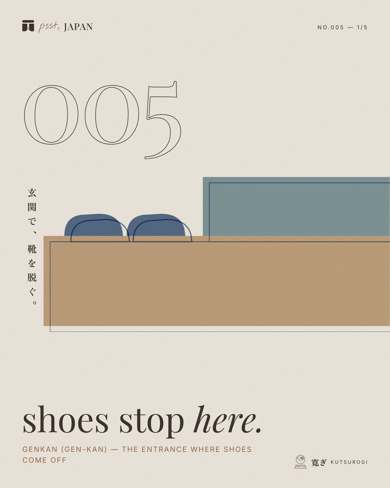
The entryway where outside shoes stop and the raised floor begins.
What it is
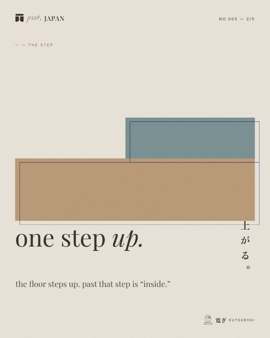
The genkan is the entrance space of a Japanese building, and it's built around one simple idea: there's a low floor for the outside world and a raised floor for the inside. You step into the genkan in your shoes, take them off on the lower level, and step up onto the wooden floor or tatami in socks or slippers.
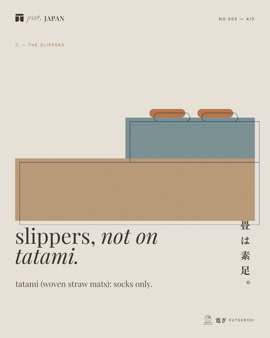
In a home, a ryokan, a temple or an old restaurant, the step up is the line. Sometimes it's a few centimeters, sometimes a full knee-height. There's usually a shoe cupboard (getabako) nearby and, at an inn or restaurant, a row of slippers waiting for you, toes pointing inward.
Older and grander buildings may also have a shikidai: a broad, low wooden step in front of the raised floor. It's a formal landing, originally where guests stepped from a palanquin into the house.
Why it matters
The word comes from Zen temple architecture. An early layout of this kind of entrance appears on a 14th-century plan of Kenchō-ji in Kamakura, and by the 16th century "genkan" meant the formal guest entrance to a temple's abbot's quarters.
In the early Edo period, the samurai class adopted it, and a grand genkan with a shikidai became a status symbol. For a time, commoners weren't allowed one at all; by the 1700s, wealthy merchants, village headmen, doctors and inns had won the right. The everyday genkan of modern homes is generally traced back to the simpler entrances of lower-ranking samurai: just an earth floor for taking off shoes and a step up. A formal privilege became the most ordinary threshold in the country.
Where to see it
- Ryokan (traditional inns), where the genkan is often the first impression and staff may greet you there
- Temple halls you can enter, with shoe racks or plastic bags for your shoes
- Older restaurants with tatami rooms, and izakaya with raised seating areas
- Historic samurai and merchant houses open to the public
Manners
- Shoes come off before you step up. Never put a shod foot on the raised floor
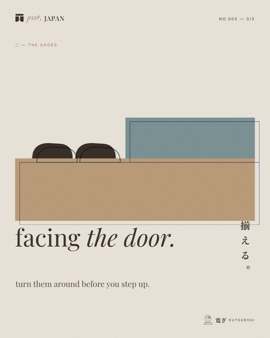
- Step out of your shoes facing in, then turn them so the toes point to the door (or let staff do it at a ryokan)
- Toilet slippers stay in the toilet. Don't walk them back into the room
- Socks are a good idea; bare feet in temples and restaurants feel a bit too casual
psst,
Wear shoes you can slip off without sitting down. You'll take them off more times in one day than you think.