侘び寂び wabi-sabi
wa-bi sa-bi
Beauty found in things that are simple, humble, imperfect and aged.
What it is
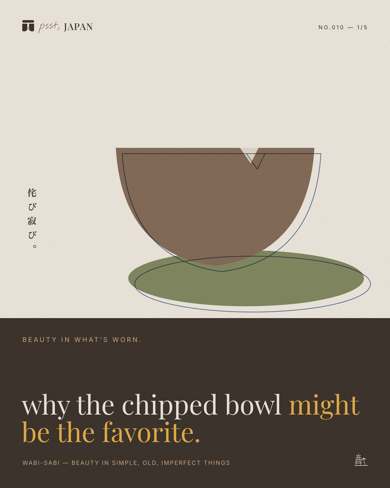
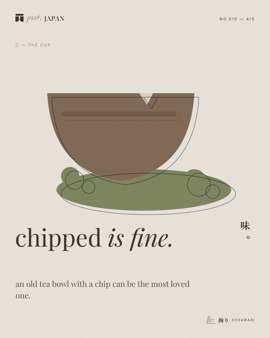
Wabi-sabi is a way of seeing beauty in things that are plain, worn and not quite perfect: a hand-shaped tea bowl with an uneven rim, a wooden post darkened by centuries of hands, moss creeping over a stone lantern.
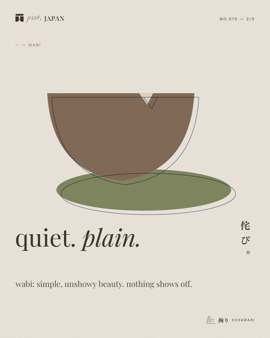
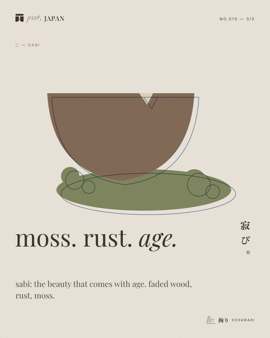
It's two ideas joined together. Wabi is a quiet richness in simple, unadorned things, the feeling that less can be enough. Sabi is the beauty of things marked by time, weathered and patinaed, showing their age instead of hiding it.
Together they push against polish and display. A wabi-sabi object doesn't shout. It rewards a second look.
Why it matters
The ideas grew out of the tea ceremony. In the Muromachi period, tea gatherings among the elite were showcases for expensive imported Chinese wares. The tea master Murata Shukō, who served the shogun Ashikaga Yoshimasa, pushed back with a quieter, more spiritual style of tea (later called wabi-cha) built on simpler, local utensils.
In the 16th century, Sen no Rikyū (1522–91) carried this further: tiny, bare tea rooms, a low crawl-through entrance, and plain bowls. His approach shaped the tea schools that still exist today, and with them the Japanese taste for the rustic and the imperfect, which runs through ceramics, gardens and interiors to this day.
Where to see it
- A tea ceremony experience, where the bowls, the room and the pace all carry the idea
- Ceramics shops and museums: look for raku and Hagi ware, with their irregular shapes and soft, earthy glazes
- Moss gardens and old temple buildings, where age is left visible
- Kintsugi-repaired pieces, which turn damage into decoration
Manners
- At a tea ceremony, hold the bowl with both hands and admire it before and after drinking. Complimenting the bowl is part of the ritual
- In shops, ask before handling ceramics. Many are one-of-a-kind and expensive
- Don't call a handmade piece "flawed." To its maker, the irregularity is the point
psst,
The cheapest, best wabi-sabi souvenir is a rough-edged handmade cup from a local kiln shop. Use it every day for a year and it becomes yours.