Onsen in Japan: what it is, and which town to pick
Some links here are affiliate links (listed at the end of the page): we may earn a small fee, your price is the same. How this works
An onsen is a natural hot spring. Under Japanese law, that means water from underground that is at least 25°C or rich in certain minerals. You wash first, bathe nude, keep the towel out of the water and take no photos. For a first onsen from Tokyo, Hakone is the easiest: about 85 minutes from Shinjuku.
At a glance
- An onsen is a natural hot spring: by law, 25°C or warmer at the source, or rich enough in certain minerals.
- You bathe nude, after washing at the shower stools. The small towel stays out of the water.
- No photos in the bathing area.
- Tattoos: rules vary. Private baths (kashikiri-buro) are the simple answer.
- Easiest first onsen from Tokyo: Hakone, about 85 minutes from Shinjuku.
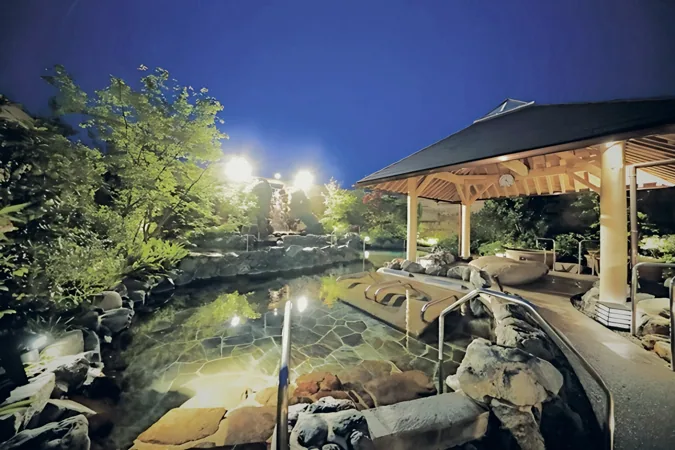
What is an onsen?
An onsen is a hot spring. Japan’s Hot Springs Act counts water or gas from underground as a hot spring if it is 25°C or warmer at the source, or carries enough of certain listed minerals.
So an onsen can be cooler than 25°C and still qualify, if the minerals are there. A sento is a public bathhouse; it is an onsen only if its water meets the same rule. A rotenburo is an outdoor bath. A ryokan is a Japanese inn, and many have their own onsen baths.
So: “onsen” is about the water, not the building.
How does a first onsen bath work?
Undress in the changing room, wash fully at the shower stools, then get in. Keep the small towel out of the water and tie long hair up.
- Leave everything in the changing room, swimwear included. JNTO says onsen are usually enjoyed nude.
- Wash first, with soap and shampoo, and rinse off completely. Remove makeup.
- Get in slowly. Fold the small towel on your head or on the edge of the bath.
- Keep it quiet: no swimming or splashing, and no phone in the bathing area.
- Skip alcohol before bathing, JNTO advises.
So: wash first, towel out, voice down. That covers almost every rule.
What if you have tattoos or feel shy?
Book a private bath (kashikiri-buro), or a room with its own outdoor bath. Some traditional onsen still refuse tattoos, but more now accept them.
Kinosaki’s official tourism site describes its 7 public baths as tattoo-friendly. Elsewhere, check each bath’s own page. Our onsen with tattoos guide has the details. JNTO also says many onsen welcome children, but check the rules first.
Which onsen town should you pick?
Pick by your route. From Tokyo, Hakone. From Kyoto or Osaka, Kinosaki. In Kyushu, Beppu or Kurokawa. In Shikoku, Dogo.
| Onsen town | Region | Best for | From |
|---|---|---|---|
| Hakone | Near Tokyo | A one-night ryokan stay from Tokyo, with lake and Fuji views on clear days | About 85 min from Shinjuku |
| Kinosaki | Sea of Japan side (Kansai) | Walking between public baths in yukata; snow crab in winter | About 2h40 from Shin-Osaka by limited express |
| Beppu | Kyushu | Many kinds of bath in one town: sand baths, steam, the “hells” (for viewing) | By limited express from Hakata, Fukuoka |
| Dogo (Matsuyama) | Shikoku | One of Japan’s oldest onsen towns, around a grand wooden bathhouse | Short streetcar ride from central Matsuyama |
| Kurokawa (Aso) | Kyushu | A small riverside village of ryokan with outdoor baths | North of the Aso caldera; a car helps |
Travel times and town notes from our own city guides, which list their official sources.
Want one night at a ryokan near Tokyo? Hakone is the usual pick: Agoda: stays in Gora · Agoda: stays in Hakone-Yumoto. Our Hakone stay guide compares the areas.
Is winter a good time for an onsen?
Yes. Cold air and a hot outdoor bath go well together, and winter brings snow crab season to Kinosaki.
Heading to Beppu or Kurokawa? Start in Fukuoka, where the evening yatai street stalls are part of the trip. Weekends and holidays book up fast in small onsen towns. In winter, mountain roads to places like Kurokawa can freeze, so check the route before you drive. See Japan in January for the season.
What else do people ask about onsen?
Short answers to the questions first-time visitors ask most.
What counts as an onsen in Japan?
Under Japan’s Hot Springs Act, water or gas from underground that is 25°C or warmer at the source, or that contains enough of certain listed substances, is a hot spring.
Do you wear a swimsuit in an onsen?
No. JNTO says onsen bathing is usually done nude, and clothes, including swimwear, stay in the changing area.
Can I go to an onsen with tattoos?
Sometimes. JNTO says some traditional onsen don’t accept tattoos, but this is changing. Look for tattoo-friendly baths or book a private bath.
Can I take photos in an onsen?
No. JNTO says no photos at all in bathing areas, out of respect for other bathers’ privacy.
Is a sento the same as an onsen?
Not always. A sento is a public bathhouse; it only counts as an onsen if its water meets the Hot Springs Act definition.
Sources
4 links · tap to open
Official pages, each checked on Nov 18, 2026. Hours, dates and rules change; confirm on the official page before you go.
- Hot Springs Act (Act No. 125 of 1948), Article 2 and Appended Table — Japanese Law Translation (Ministry of Justice) (checked Nov 18, 2026)
- Japan Spa Association: What is onsen? (25°C or listed substances) (checked Nov 18, 2026)
- JNTO: Bathing manners and tips (nude bathing, washing, towels, tattoos, private baths, no photos) (checked Nov 18, 2026)
- Visit Kinosaki (official): 7 tattoo-friendly public baths (checked Nov 18, 2026)
Affiliate links on this page: Agoda. If you buy through one we may earn a small fee; your price is the same.